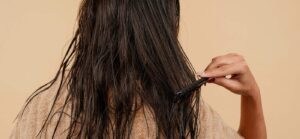
Hair changes are common in the years around menopause, and many women find them more upsetting than hot flushes or disturbed sleep, because they are visible in a way those symptoms are not. More hair left in the plughole after washing, or a parting that looks wider in the mirror than it did a year ago.
In most cases these changes reflect ordinary hormonal and age-related shifts rather than an underlying condition. Hormones are part of the picture, though rarely the whole of it. Understanding what happens to the hair growth cycle at this stage, and what else may be contributing, makes it easier to judge which changes need investigating and which are likely to settle in time.
Why hair changes during perimenopause and menopause
Every hair on the scalp grows on its own schedule. Follicles move through a growing phase, known as the anagen phase, which can last several years, followed by a resting phase, the telogen phase, after which the hair is shed and the follicle begins again. Because each follicle runs on its own timing, shedding is normally spread out across the scalp and goes unnoticed. The NHS puts typical daily hair loss at 50 to 100 hairs.
Oestrogen appears to have a protective role in this cycle, helping to keep hair in the growing phase for longer. As levels begin to fluctuate and then fall through perimenopause, the years leading up to the final period, hair may spend less time growing and more time resting, which is one of several changes that follow as hormone levels shift through perimenopause. The practical result can be hair that grows more slowly, does not reach the length it once did, and feels finer between the fingers.
There is a second mechanism at work in some women. As oestrogen and progesterone decline, the relative influence of androgens, including testosterone, may increase. In follicles that are genetically sensitive to androgens, this may lead to gradual miniaturisation, where each new hair grows back finer and shorter than the one before it. This is the process behind female pattern hair loss, known medically as androgenetic alopecia. Genetic sensitivity is the variable here, which is why two women with similar hormonal changes can have quite different experiences.
Age plays a part independently of hormones. Follicles shrink over time and the total number reduces, so some of what is often attributed to menopause may reflect hair ageing alongside the rest of the body. Nutrition through this stage of life is worth thinking about more broadly than hair alone, which is where reproductive and hormone health comes in.
What menopausal hair loss looks like
Hair loss at this stage tends to be diffuse, affecting the scalp fairly evenly, rather than appearing in distinct patches. Common signs include:
- Increased hair loss when washing or brushing
- General thinning across the whole scalp
- Thinning at the crown
- A parting that appears wider than it used to
- Hair that no longer grows as long as it once did
- Changes in texture, with hair feeling drier or more brittle
Circular bald patches, loss confined to one area, or hair loss accompanied by changes to the skin of the scalp point towards a different cause and warrant a medical opinion. Women rarely lose hair to the point of baldness in the way that some men do, and where that happens there is usually a separate explanation.
Other reasons hair may be thinning at this stage
Menopause coincides with a decade of life in which several other causes of hair thinning become more likely, and ruling those in or out is often more useful than assuming hormones are responsible.
Sudden shedding some months after an illness, an operation, a difficult period, or rapid weight loss is usually telogen effluvium, not a hormonal change. The delay between the trigger and the shedding is what makes the connection so easy to miss, and it generally settles once the cause has passed.
Low iron stores are also common. Ferritin, which reflects stored iron rather than the iron circulating in the blood, can be low while a standard full blood count looks normal, so a blood test is the only way to know. Anyone considering an iron supplement should have levels tested first, since too much iron carries its own risks. Thyroid function is also simple to test and merits a conversation with a doctor, particularly alongside symptoms such as fatigue, unexplained weight change, or feeling unusually cold.
Genetics are an important factor in female pattern hair loss, and a family history on either side raises the likelihood. Some medicines list hair changes among their possible effects, so anyone who has noticed shedding after starting a new prescription should raise it with the doctor who prescribed it before stopping the medicine.
It is sensible to speak to a doctor if:
- Hair is being lost rapidly, or in an unusual pattern
- There is pain, itching, redness, or scaling on the scalp
- Hair loss comes alongside new facial hair, acne, or unexpected changes to periods
- The hair loss began at a young age
- There are other symptoms causing concern
Asking for iron, ferritin, and thyroid function to be checked is a reasonable first step before concluding that menopause is the explanation.
Nutrition and hair health
In the UK, health claims about nutrients can only use wording that has been reviewed and approved by regulators, held on a public list called the GB Nutrition and Health Claims Register. Only a small number of nutrients hold an authorised claim relating specifically to hair, and three are relevant here.
Zinc contributes to the maintenance of normal hair. Selenium contributes to the maintenance of normal hair. Biotin contributes to the maintenance of normal hair. None of them is a means of addressing hair loss during menopause, and no food supplement substitutes for a varied diet, medical assessment where symptoms warrant it, or the everyday habits set out below.
Selenium separately contributes to normal thyroid function. Biotin deficiency is uncommon among people eating a varied diet, and where levels are already adequate, taking more is unlikely to change anything. Dietary sources include shellfish, meat, and pumpkin seeds for zinc, Brazil nuts and fish for selenium, and eggs, nuts, and wholegrains for biotin. These nutrients are commonly combined in hair, skin, and nails formulations.
Adequate protein supplies the amino acids used to build keratin, and iron, the B vitamins, and several other nutrients have roles that connect to hair indirectly without carrying an authorised hair claim. There is more on how nutrition affects hair, skin, and nails, including the everyday factors that tend to matter more than most people expect.
Everyday care and medical options
Looking after hair and scalp day to day
Hair that is finer than it used to be is more vulnerable to breakage, so reducing mechanical and heat stress can make a difference to how hair looks even when hair is falling out more than usual. Tight styles that pull at the follicle over long periods can cause lasting damage. Gentle products, lukewarm water, and a conditioner suited to dry hair all help, and where hair is sparse the scalp benefits from sun protection.
Weight loss, if planned, is better done gradually. Sharp reductions in intake can trigger shedding. Sleep and stress both influence the picture, though neither can always be controlled, and small realistic habits tend to be more useful than a wholesale overhaul. Any change made now will take roughly three to six months to become visible, because hair grows slowly.
Medical options to discuss with a doctor
Topical minoxidil is the only licensed medicine in the UK for female pattern hair loss. Only the 2% strength holds that licence for women, and it is not available on NHS prescription. The 5% strength can be used on the advice of a healthcare professional, but is not licensed for women.
Minoxidil is applied to the scalp, takes several months to show any effect, and needs continued use, because any benefit reverses when it is stopped. Some people experience a temporary increase in shedding when starting it. The pros and cons are worth discussing with a doctor or pharmacist.
Hormone replacement therapy, usually shortened to HRT, replaces hormones that decline during menopause and may relieve symptoms such as hot flushes and night sweats. Some women find their hair improves alongside other symptoms, though HRT is not prescribed primarily for hair. Responses vary, and it is not suitable for everyone, so it is a decision to make with a doctor who knows the full medical history.
Other prescription options exist for pattern hair loss and are a matter for a doctor to assess. Nutrition and everyday care sit alongside these options rather than in place of them.
Hair Health Through the Menopause Transition
Changes to hair volume, growth rate, and texture are a common part of the menopause transition and usually reflect the ordinary course of hormonal and age-related change rather than an underlying disorder. Falling oestrogen may shorten the growing phase, and in follicles that are genetically sensitive to androgens, hair may gradually become finer. For many women, the rate of shedding eases over time.
Hormones are rarely the only factor. Iron status, thyroid function, recent illness or stress, medication, and family history all deserve consideration before menopause is accepted as the explanation, and most can be checked with a routine blood test.
Zinc, selenium, and biotin each contribute to the maintenance of normal hair, and getting enough of them from food is the sensible baseline. Adequate protein supplies the amino acids used to build keratin. Gentle handling and gradual dietary change will usually do more than any single product, provided expectations about timescale stay realistic.
Drawing on more than 30 years of Good Health Naturally’s experience, our nutrition team is available to discuss general nutritional support, and can talk through the reproductive and hormone health range with anyone going through this stage.
Frequently Asked Questions
Does hair grow back after menopause?
It depends on the cause. Where shedding has been triggered by illness, stress, or a period of rapid weight loss, hair usually regrows once the trigger has passed, though it can take several months. Where follicles have gradually miniaturised through female pattern hair loss, the change tends to be lasting, and the aim shifts towards slowing further thinning rather than restoring what has gone.
How long does menopause hair loss last?
Temporary shedding of the telogen effluvium type generally resolves in its own time once the trigger has passed, though hair grows slowly enough that recovery takes months, not weeks. Gradual pattern thinning follows a different course, progressing slowly over years, with no natural end point. A doctor can help distinguish between the two.
Which vitamins contribute to normal hair?
Zinc contributes to the maintenance of normal hair. Selenium contributes to the maintenance of normal hair. Biotin contributes to the maintenance of normal hair. Iron does not hold a hair claim, though it contributes to normal oxygen transport in the body and to the reduction of tiredness and fatigue. Supplementation is most relevant where intake or blood levels are low, and testing beforehand is preferable to guessing.
Why is hair dry and brittle during menopause?
Oestrogen influences the production of sebum, the oil that keeps hair and scalp lubricated. As levels fall, the scalp may produce less of it, and hair can feel drier and more prone to breaking. Reducing heat styling and using a conditioner tends to help with how hair feels, though it is unlikely to affect the rate of shedding.
Is a blood test useful for hair loss?
It is worth asking a doctor about checking iron, ferritin, and thyroid function, particularly where shedding has been sudden, or where there are other symptoms such as fatigue or changes in weight. Testing before starting supplements avoids taking something that was never needed.